POLICY ADVOCACY

Policy can feel distant until it starts deciding what people are able to do.

Through the NCR Clean Air Campaign, I had already seen what community action could achieve. But I also began to understand its limits.

Some problems are shaped by rules, public systems and institutional decisions. Changing them requires more than awareness or local action.

I wanted to understand how citizens can push for change at the policy level, and what it takes to move an issue from lived experience into institutional action.

That meant using different tools.

Original Campaign Visual

When the Calendar Became Part of the Problem

Sport should not require choosing between participation and health.

For student athletes like me in Delhi, the timing of school sport mattered.

Tournaments, trials and qualifying events were routinely scheduled during the same winter months when Delhi's air pollution is at its worst.

For students who trained throughout the year, the choice could become painfully simple: Compete in hazardous air. Or sit out.

Along with other student athletes, I became part of a group that approached the Delhi High Court, asking for the school sports calendar to be moved away from peak pollution months.

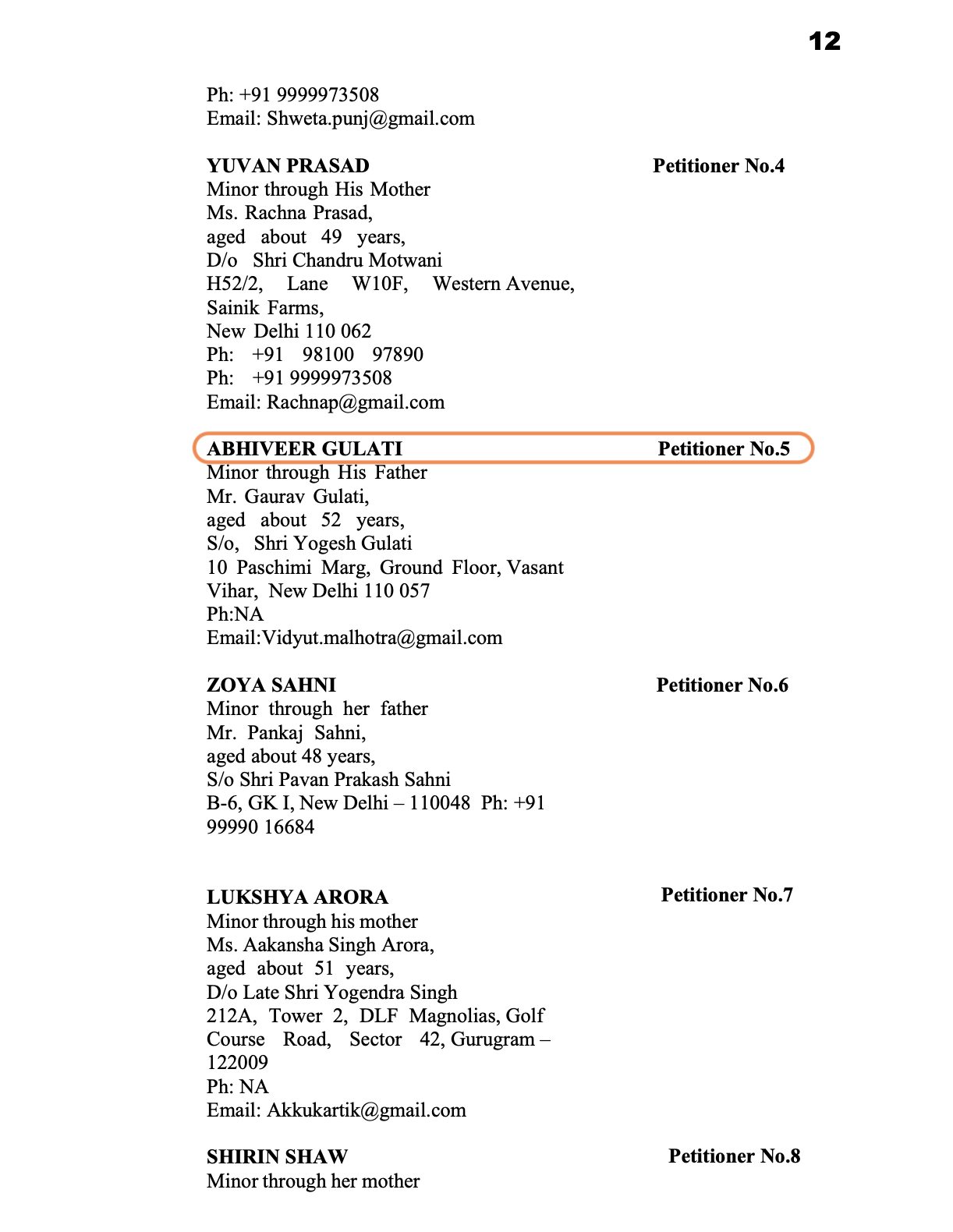
The petition was filed by 11 students who argued that the existing schedule was placing children's health and their ability to participate in sport in conflict.

NOVDECJAN

The Petition

Turning experience into something the system could act on.

Working with counsel meant moving beyond saying that the air was bad. The case had to show what that meant for students.

I helped bring together student experiences, testimonies and medical material, finalized court pleadings and attended counsel meetings and court proceedings as the petition moved forward.

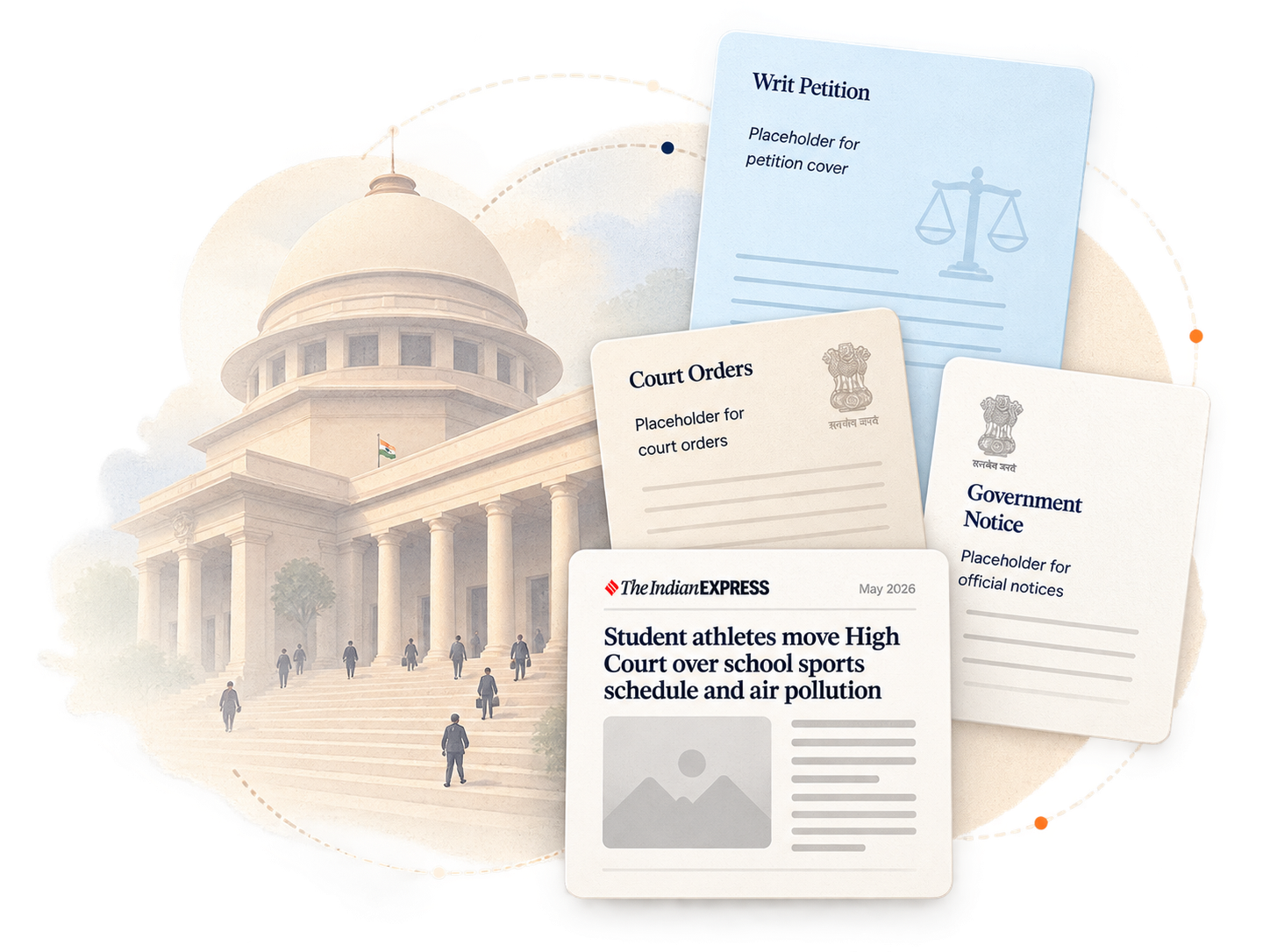
First page of the writ petition filed by students in the Delhi High Court
11
student
petitioners
Delhi High Court
forum
One clear ask —move events away from peak pollution

Asking the System to Account for Itself

Advocacy was not only about going to court.

Using the Right to Information Act, I sought information from municipal authorities on pollution-control measures, how allocated funds were being used, delays around road-dust control measures and preparedness ahead of the next pollution season.

The responses were revealing: instead of providing clear accountability, several departments pointed to other agencies as responsible for the gaps or delays

I also made representations to the Delhi Chief Minister and Lieutenant Governor calling for stronger action on NCR's air-pollution crisis, citing learnings from the China model

Sometimes accountability begins with a very simple question: where did the plan stop becoming action?

Making a Private Experience Public

The High Court petition created a wider conversation around what polluted air was asking student athletes to accept as normal.

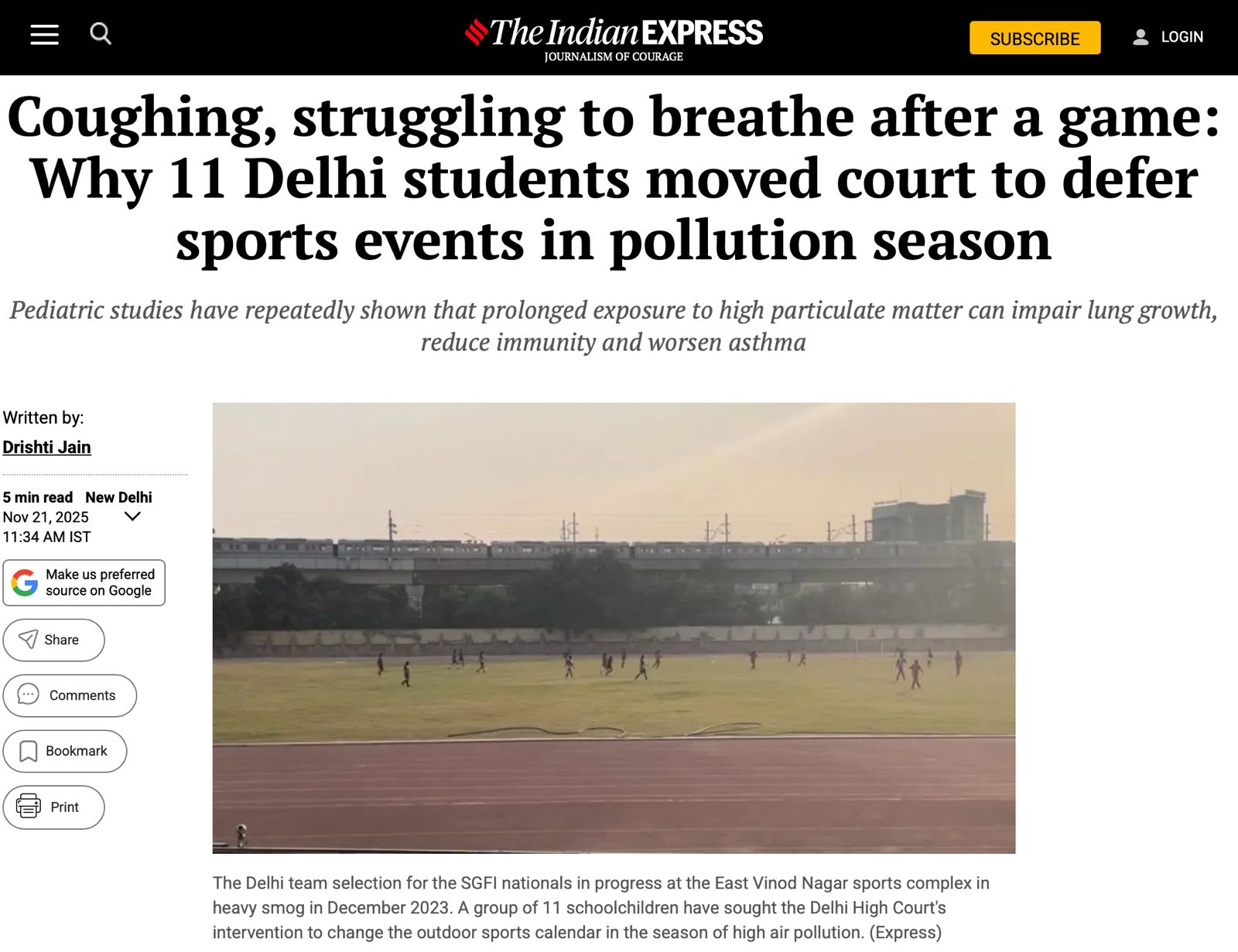
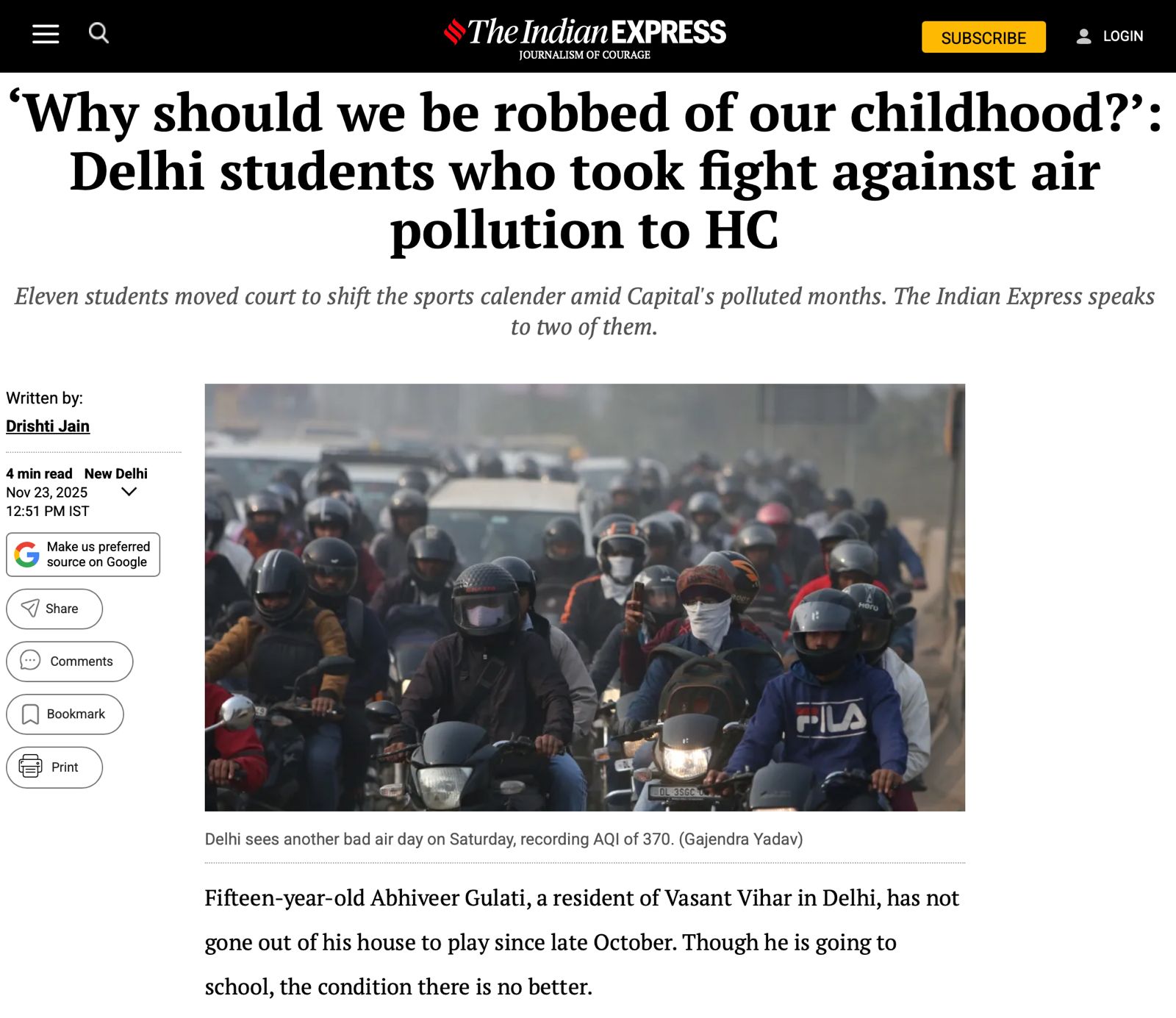
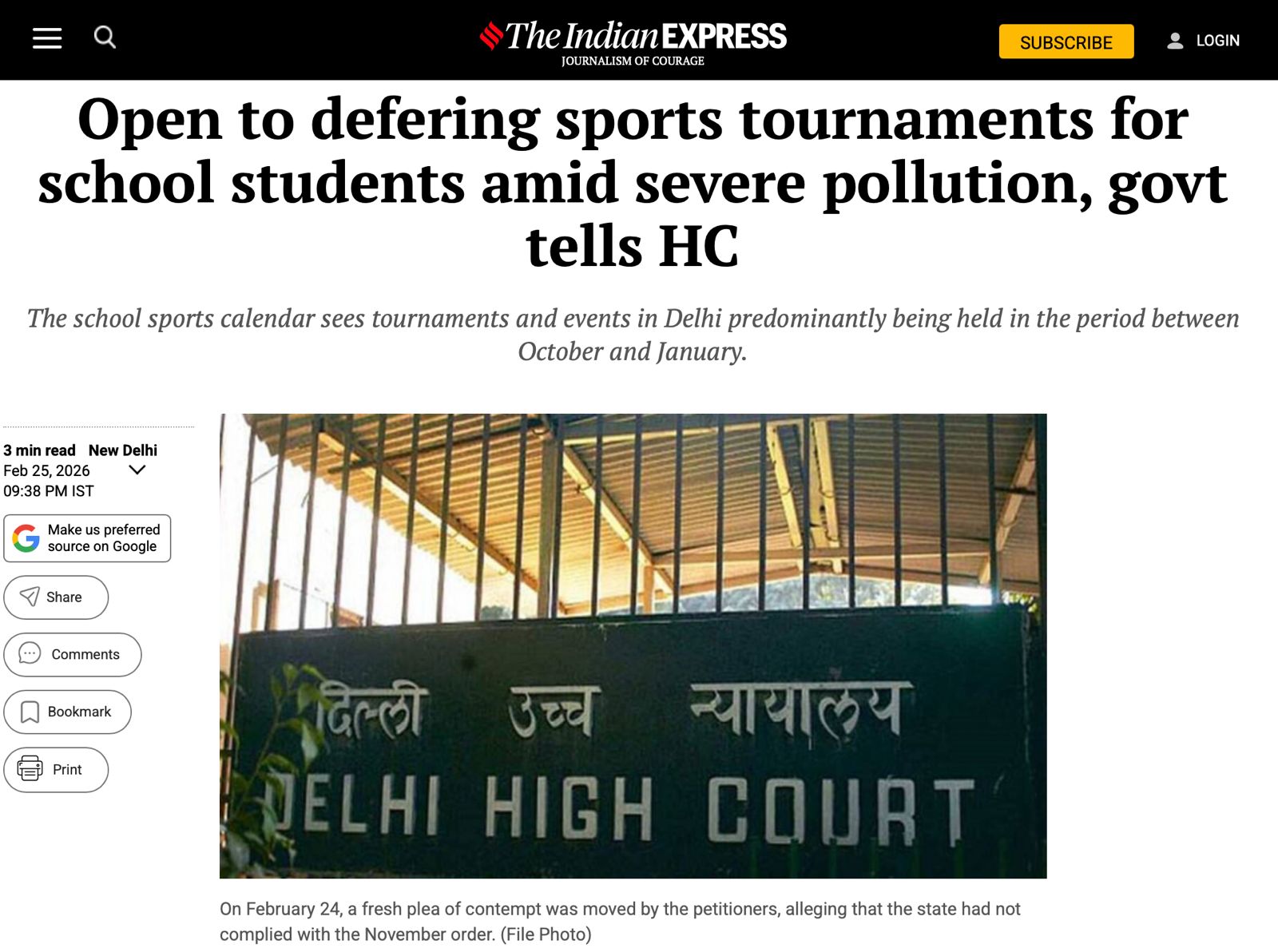
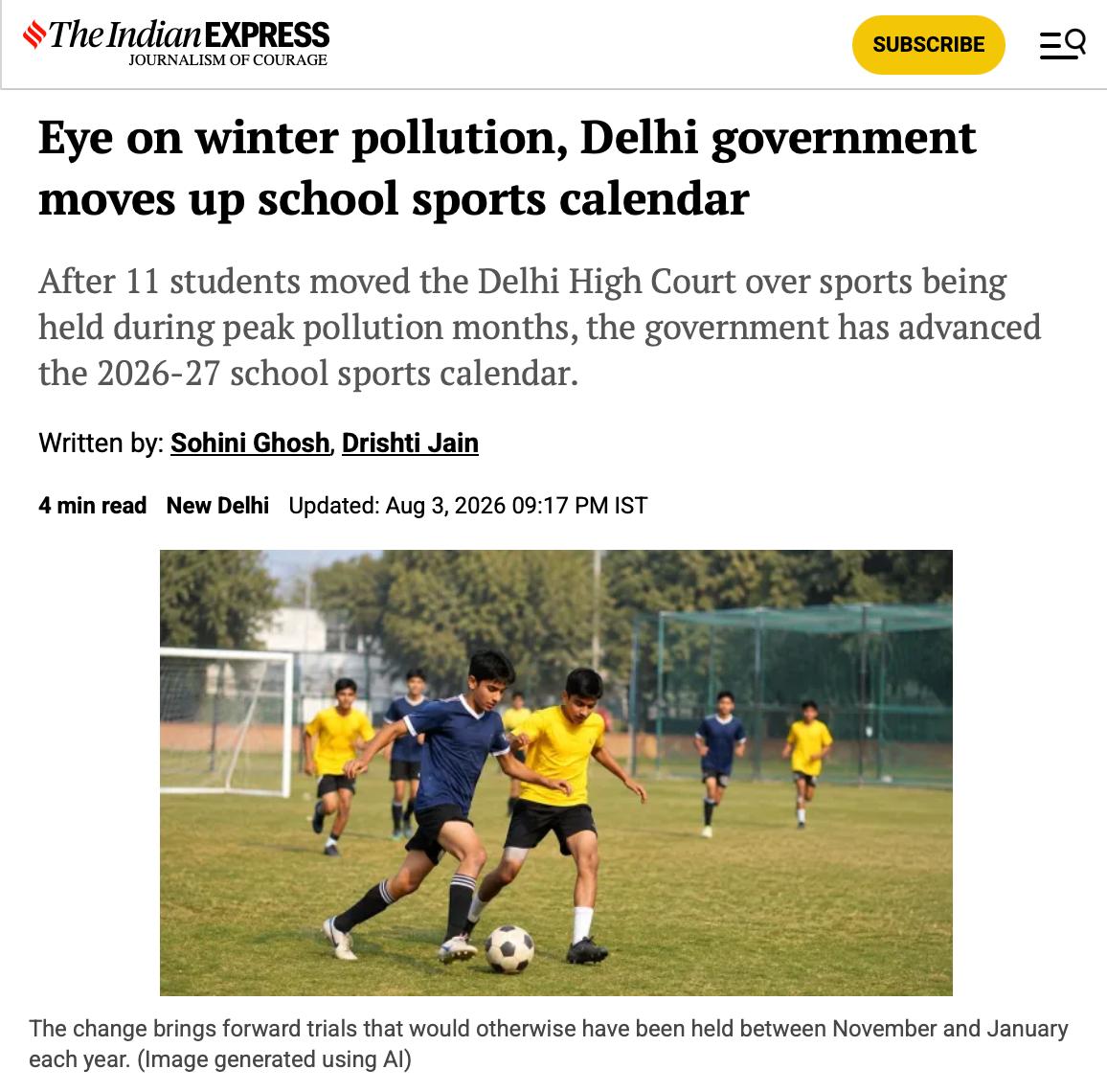
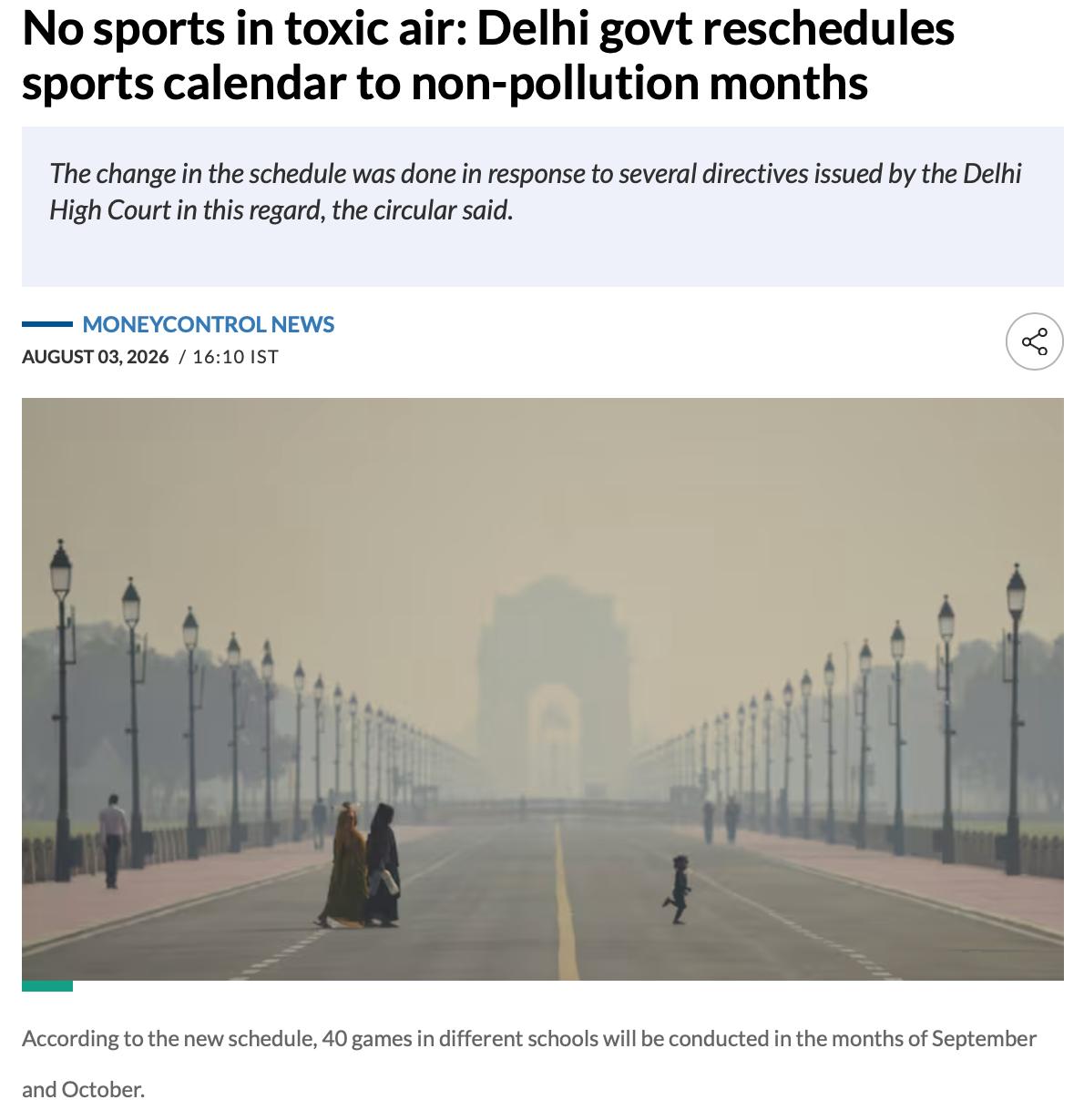
The campaign and petition received extensive national and local media attention, including multiple reports in The Indian Express. I was also interviewed by The Indian Express about the issue and the concerns that led us to approach the Court.

I also spoke live on Radio Mirchi 93.5 FM about the impact of air pollution on student athletes and why we had approached the Court.

The point was never to be in the news. It was to make an issue experienced by students visible enough that it could no longer remain only their problem.

Then the Response Began to Shift

November 2025

11 students approach the Delhi High Court.

School tournaments and trials during peak pollution months are challenged.

February 2026

Government tells the Court it is open to deferring events.

The Delhi Government indicates that events could be deferred when air quality becomes severe.

July 2026

A revised sports schedule is issued.

Delhi's Directorate of Education brings the 2026–27 school sports calendar forward.

August 2026
THE CALENDAR CHANGED.

The Delhi Government informed the High Court that school sporting events for 2026–27 would be completed before the peak winter pollution period.


The revised schedule brought competitions forward, with events to be completed by October rather than extending into November, December and January.

What began as a student-led challenge had now translated into a concrete policy and administrative change: the school sports calendar itself was redesigned around the health risks posed by peak pollution months.

Taking note of the revised calendar, the High Court closed the petition after the students' counsel expressed satisfaction with the government's move.

OUTCOME
11
students approached the Court
1
calendar reconsidered
POLICY CHANGED
Peak winter moved out of schedule
250,000 +
Student athletes impacted

The Change Was Small on Paper.

A few dates moved on a calendar.

But those dates decide when thousands of students train, trial and compete outdoors.

For me, that made the outcome especially meaningful.

Policy can feel abstract until one line in a schedule changes what someone is able to do in real life.

2026–27
Sports Calendar
Events to be completed by October.

What Advocacy Changed for Me

I used to think raising your voice was the important part. I now think what happens after that matters more.

  • Can you support the argument with evidence?
  • Can you identify who actually has the authority to act?
  • Can you stay with the process when the first response is not the outcome you hoped for?
  • And can you tell when a change on paper will actually change someone's experience?

I have become increasingly interested in that journey from lived experience to evidence, from evidence to institutions, and from institutions to policy.

The Two Halves of the Work

COMMUNITY
AwarenessProtectionBehaviourMobilisationResearch
SYSTEM
EvidenceRTILegal actionMediaPolicy response