EQUITABLE ACCESS
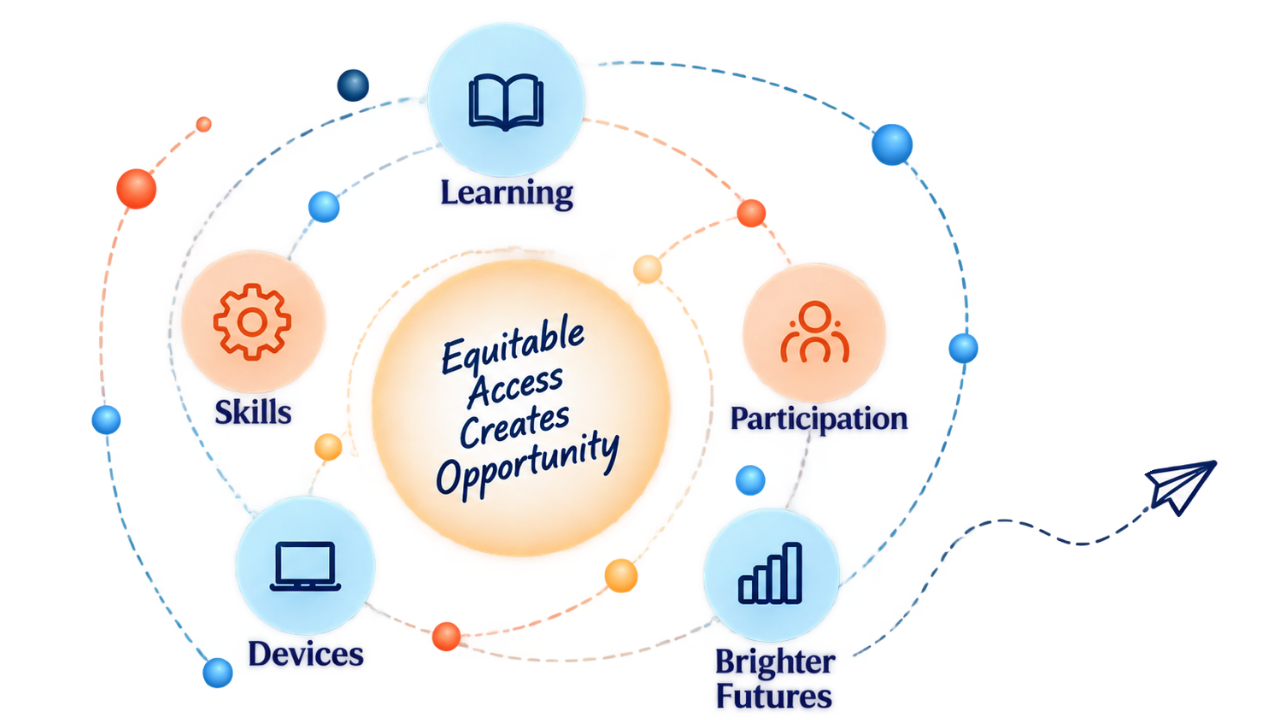
Access is not one thing.
A device can get someone into a classroom. The right skills can help them go much further.
An opportunity can exist and still remain out of reach if someone does not have the tools, knowledge or confidence to use it.
What helps turn access into real participation and opportunity?
Where It Began
A small gap that was difficult to unsee.
During COVID, I became aware of how differently online schooling worked depending on what a family had access to.
Mohammad, who often joined us for cricket and football in my neighbourhood, shared a single smartphone with his family. His father carried it during the day, which made staying connected during online school difficult. I had an unused device at home, so I loaned it to him.
That experience grew into a device-access initiative with my brother. We began collecting and refurbishing unused devices for students at Bharti Foundation schools, and later supported educational supplies through a fundraiser.
“ A small device can open a much bigger world. ”
From Access to Capability
Equitable Access Project
By 2023, the work developed into a sustained engagement with Bharti Foundation schools across Haryana and Punjab, driven by a broader question: how can rural students gain not only access to education, but also the support, resources, infrastructure and career-building opportunities that make that access meaningful?
The focus gradually widened from addressing immediate needs to building practical capability across learning, confidence, financial awareness, sustainability and participation.
Learning Support
English, Mathematics and Hindi for Grades 5 and 6, with schools reporting marked improvement in assignments and grades.
Confidence & Life Skills
Anti-bullying awareness, hygiene and community-building
Financial Awareness
Money management and practical financial literacy, including SavingWise.org
Environmental Awareness
Sustainable habits, conservation and environmental responsibility
Participation & Equity
Activities around equal access for girls and wider community involvement, with 11 student peer mentors brought on board to help extend participation.
The more time I spent with students, the more I began to notice the difference between providing access and making access usable.
It also made me think more deeply about policy design: equitable access depends not only on making resources available, but on designing systems that account for the different barriers people face in reaching and using them. That distinction has become one of the most interesting parts of the work for me.
View Letter of Appreciation→
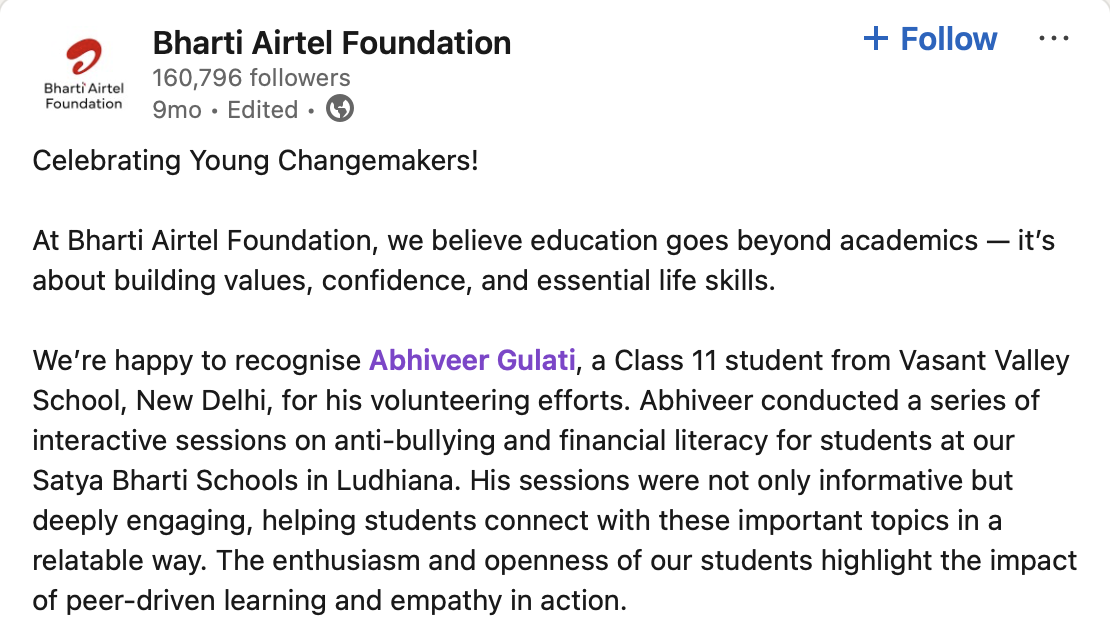
Featured as a Young Changemaker by Bharti Airtel Foundation
View LinkedIn PostFrom the Field · Equitable Access
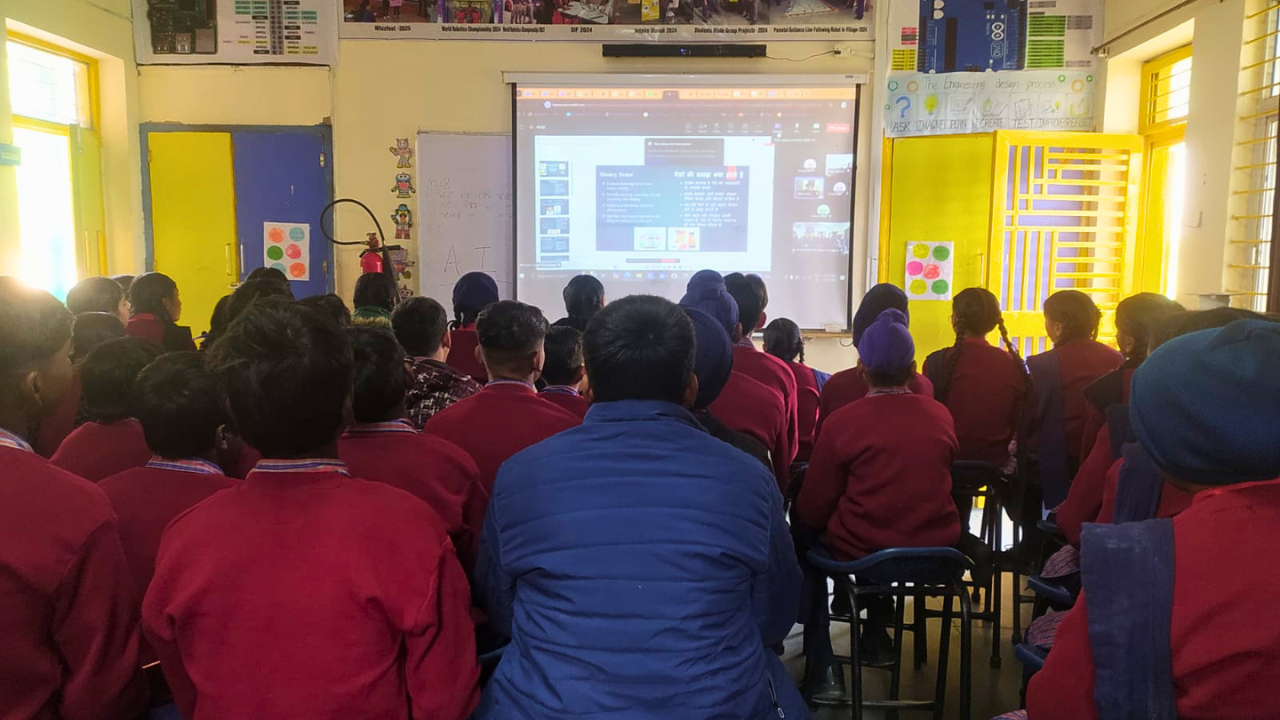
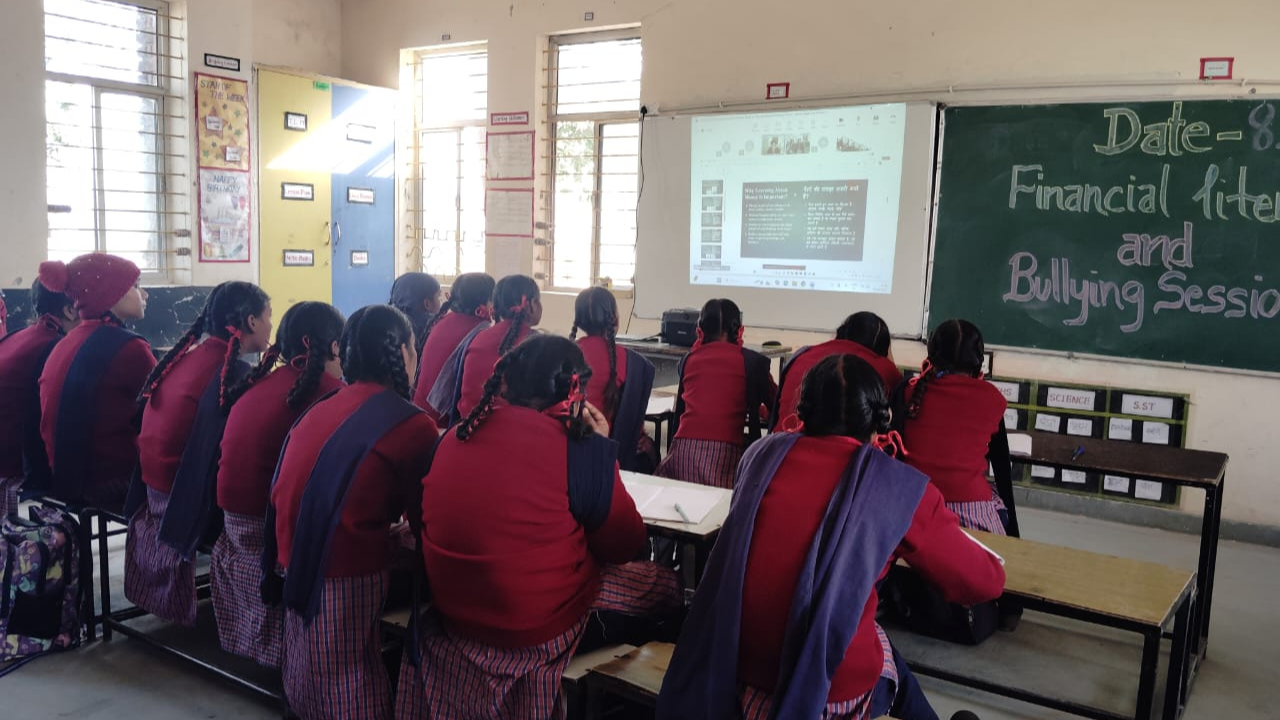
Animal Preservation Session
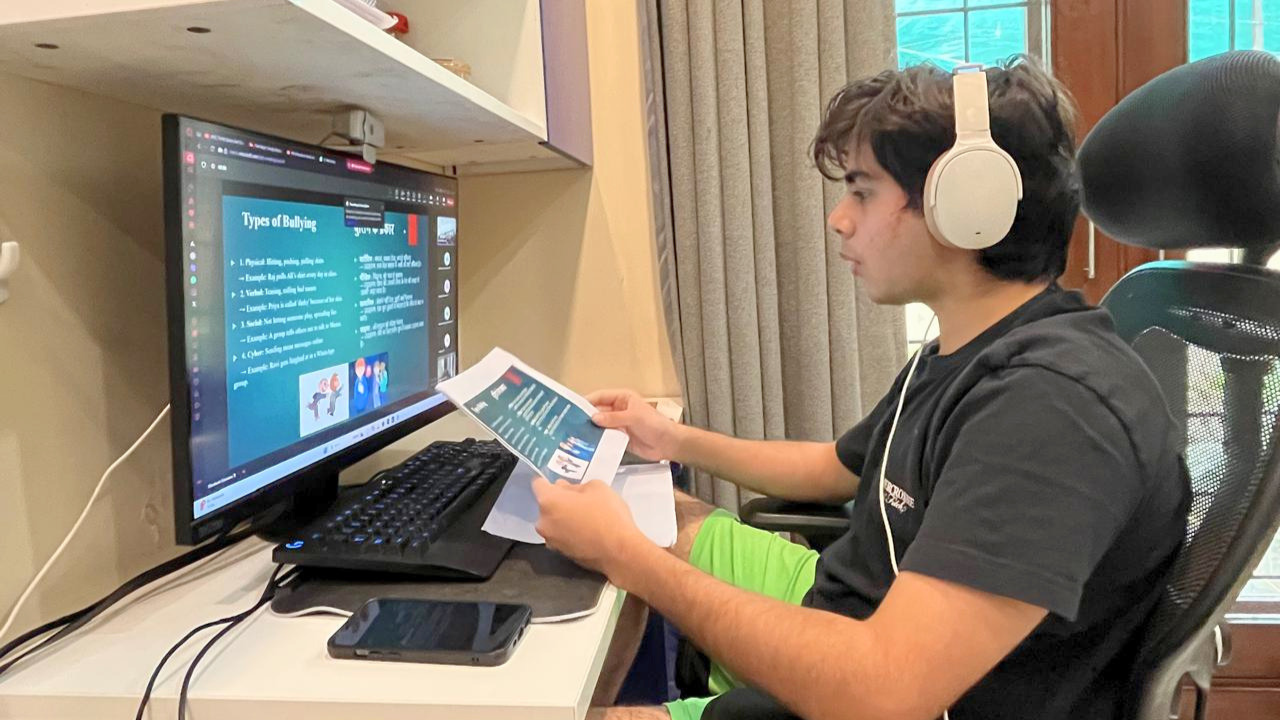
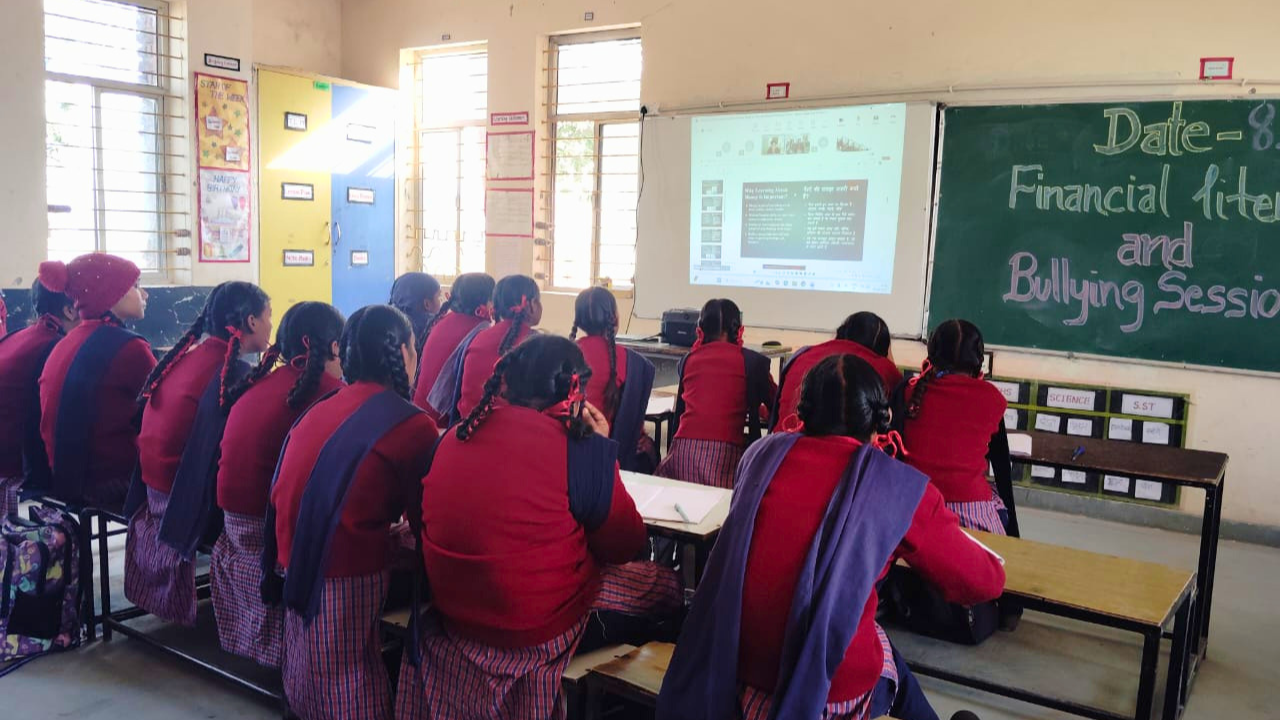
Anti-Bullying Awareness Sessions
Anti Bullying Awareness Presentation
Financial Literacy Session
Making the Work Travel Further
How do you make an initiative less dependent on the person delivering it?
Individual workshops could only go so far.
In 2024–25, I created and implemented a Handbook for Life-Skill Development & Community Building Activities, bringing together structured activities across leadership, management, art, physical development, environmental awareness and community service.
The idea was to leave behind something teachers and students could continue using after a particular session had ended.
I began to understand that scale does not always mean doing more yourself. Sometimes it means creating something other people can continue using.
Retail Lab
What does it take to turn education into economic participation?
Bharti Foundation offers CBSE-aligned vocational education in Retail and Beauty & Wellness across its five senior secondary schools in Punjab, combining classroom learning with industry exposure and career awareness.
At Satya Bharti School, Chogwan, I worked with teachers to build on that foundation for Grade 9 Retail students. We developed student and teacher modules that moved learning beyond the textbook through market visits, on-site & off-site training for students, store simulations, mock marketplaces and reflection.
Students worked through the decisions involved in actually running a store: organising displays, managing inventory, receiving goods, practising billing and discounts, communicating with customers and working through problems together.
The simulations went further by placing students in real store roles such as store manager, billing team and customer service, while also giving them practical exposure to stock ledgers, reorder levels, inspecting goods, visual merchandising and buyer-seller interactions.
This helped them see how different parts of a retail operation connect, from backroom inventory to the sales floor, while building communication, negotiation, teamwork and decision-making through practice rather than instruction alone.
RUN A STORE
Roles, floor operations and customer service
BUILD A DISPLAY
Visual merchandising and product presentation
MANAGE STOCK
Inventory, reorder levels and stock ledgers
MAKE THE SALE
Pricing, billing, discounts and customer interaction
WORK TOGETHER
Communication, negotiation, teamwork and decision-making
The idea was not simply to teach retail.
It was to make the pathway between what students learn in school, the skills workplaces require and the opportunities they may later pursue more visible across retail, supply chain, marketing, business management and even entrepreneurship.
What I found most interesting was watching concepts stop feeling like “school”. Once students were negotiating, organising inventory or solving a customer problem, the learning had a purpose they could see.
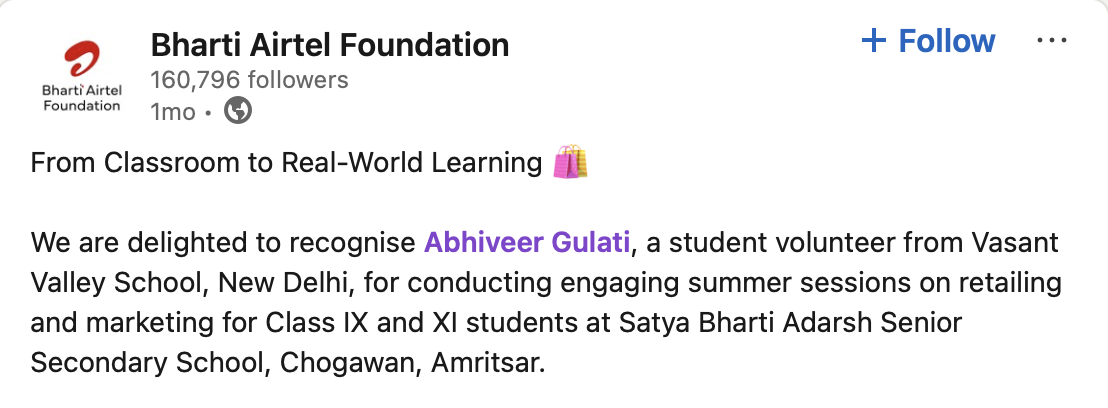
Recognised by Bharti Airtel Foundation
View LinkedIn PostInside the Retail Lab
Hands-on Retail Learning
Retail Lab Marketplace Simulation
When Learning Stayed and
Grew Beyond The Classroom
For some students, the ideas travelled home.
Rahul & Kishan
After the Retail Lab, Rahul and Kishan began using ideas around pricing, promotion, display and sales while helping their parents with their school-uniform business.
Roshni
Roshni drew on what she had learnt about customer communication, inventory management and visual merchandising while applying for a nearby sales internship, which she secured.
She also took some of that learning home, helping organise her family’s kirana store through better product grouping, billing, stock records and display.
Those moments made the value of the project much clearer to me.
Economic opportunity often begins much earlier than employment.
It begins with whether someone has had the chance to build the skills and confidence to act when an opportunity appears.
What Changed Along The Way
Across different parts of the programme, the schools also recorded changes in learning, behaviour, environmental awareness and community participation.
Learning & Participation
Improved academic assignments, classroom outcomes, attendance and participation were reported.
Behaviour
Student feedback at Chogwan reflected stronger awareness around bullying and a reduction in undesirable behaviour.
Environmental Practice
Students at Khanpur reported improved self-assessed sustainability practices around water, electricity, plastic use, recycling and conservation.
Community Participation
Students from Chawinda Devi School received local recognition for an environmental restoration and cleanliness initiative at a bus stand.
What Access Has Come to Mean to Me
I used to think about access mostly in terms of what someone had or did not have: a device, a book, a classroom.
Over time, I have started thinking about it differently.
An opportunity can exist and still remain out of reach if someone does not have the information, skills or confidence to use it.
That gap between what a system provides and what people are actually able to access is the part I find most interesting.
For me, equitable access is increasingly about closing that gap.
Recognition
Bharti Foundation | Young Changemaker
Letter of appreciation from the Chief Operating Officer, Bharti Foundation
View Letter of Appreciation→Certificate of Appreciation→